This Is the Whole Point
Meditation teachers and traditions weigh in on how to navigate pivot points, or: “the sweetest honey covering the sharpest hooks.”
Contemplative traditions have been mapping weird meditation experiences for a few thousand years. In this episode, we hear from meditation teachers trained in these traditions. After seeing hundreds of pivot points play out across their students, what patterns have they seen? How do teachers explain pivot points?
Historically, teachers have generally advised students: Be careful with pivot points, don’t pay much attention to them. Just keep meditating. This taboo exists for good reason, as the teachers explain. But they also suggest that, perhaps, we shouldn’t discourage interest in some of the most significant experiences in people’s lives. Perhaps we can learn to celebrate and examine these experiences without undermining our meditation practice.
Featuring
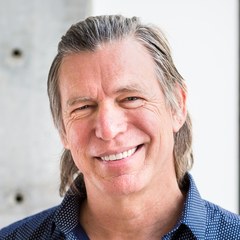
Michael Taft
Michael is a meditation teacher, author, and host of the Deconstructing Yourself podcast. Michael has been meditating for over 35 years and has extensive experience in both Buddhist and Hindu Tantric practice. He is a co-founder of the Alembic center in Berkeley. He previously served as editor-in-chief of Being Human and was the long-time editorial director of Sounds True.
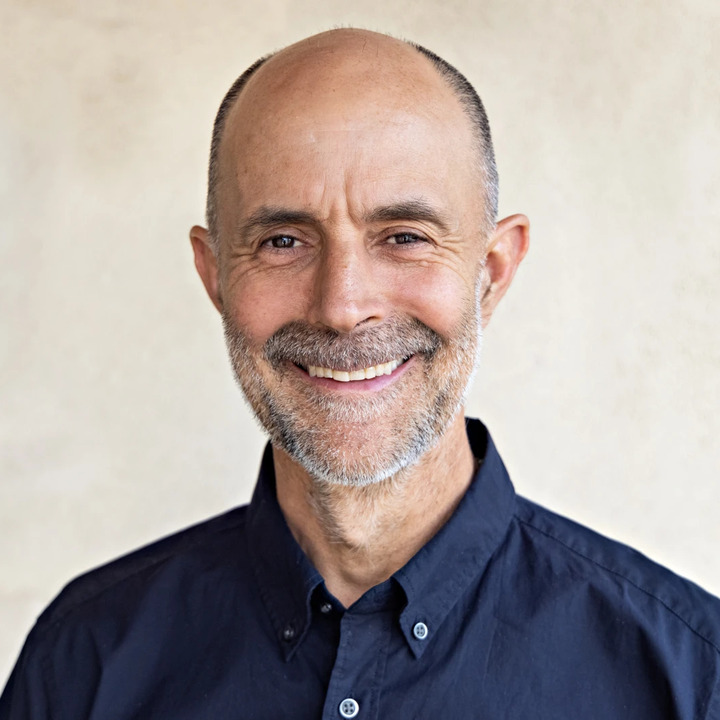
Henry Shukman
Henry is a poet, author, mindfulness teacher, and Zen master. He has studied meditation for 35 years, principally in the Sanbo Zen lineage. His most recent books are Original Love and the Zen memoir One Blade of Grass. He is also co-founder of the single-path meditation app The Way.

Tina Rasmussen
Tina is a meditation teacher, author, and psychology PhD. She is executive director of the Luminous Mind Sangha. She was initiated into the Tibetan Buddhist Nyingma lineage, and was later the first Western woman authorized to teach by the Burmese meditation master Pa Auk Sayadaw. Her most recent book is Practicing the Jhanas.

Charlie Awbery
Charlie spent 25 years studying and practicing Vajrayana Buddhism before stepping out to co-found Evolving Ground, a contemporary Vajrayana community. They are also author of Opening Awareness: A guide to finding vividness in spacious clarity.

Richard Shankman
Richard is a meditation teacher, and co-founder of Mindful Schools and the Sati Center for Buddhist Studies. He is the author of two books: The Experience of Samadhi, and The Art and Skill of Buddhist Meditation.
Transcript
Charlie: I was 22, and I had been working on a project in India. And after that finished, I went for the first time to a meditation retreat. And I had never meditated before. And I went from never having meditated at all, into 16 hours a day very intensely, at my own volition. Like, I was really curious, like "What is this? I wanna get to the bottom of this. I want to really understand, what is meditation? How does it work?"
This is Charlie Awbery, who's currently a meditation teacher. What we're hearing is the story of their first pivot point.
Charlie: And towards the end of those three weeks, I had, what I now would understand as a central channel opening energetic experience. Some people would call it kundalini, energetic, rising up from the, the base of my spine all the way up, explosive. My heart opened, completely out of control. I, I was, probably for about eight hours in energetic experience that I have no idea what was occurring and then the energy kind of continued up to my throat, and over a long period the, my throat opened up, and then this whole area up here, also opened up. Eventually that ended in a sense of clear, vast, extremely peaceful, calm, vibrant, very difficult to put into words.
Just a sense of my whole body having been almost like a fire hose had just been put up through my entire system and totally cleaned out. And I was left in shock amazement.
For me, it was extremely positive. I knew that something important and good was happening to me. For people around me, I can't remember exactly. I must have been very vocal, screaming, or my body was moving a lot. For people around me, they were very concerned. They thought I was having a psychiatric breakdown. There was some talk afterwards of putting me back on a plane to the UK, getting me treatment. For weeks. I was utterly, utterly exhausted. I remember sleeping for a lot of the rest of the time that I was in India. And then when I came back to the UK I got very depressed.
I didn't understand what had happened. I didn't know what to do with myself. After that, I was a little bit frightened of meditation. And so I stopped practicing for a while and started reading a lot, asking questions, meeting teachers going, and, just talking about that experience. I also went through the medical system and asked doctors whether there was something wrong with me. I, I wanted to really understand what had happened in my nervous system, in my body. Thankfully, very supportive, helpful doctor said, nah, don't worry about it. See if something happens again. And if anything happens again, then, you know, maybe we'll take a look.
But yeah, you seem okay. Off you go. And I'm very grateful for that because, I thought, oh, you know, okay, must be all right then.
And then eventually I came back to meditation probably some months to a year, I think before I really wanted to start sitting again.
Last episode, we heard scientists drawing from the theory of predictive processing to try and explain what's happening during these pivot point experiences like Charlie's. And the science has come up with some interesting stories.
But at the same time, the science of deep meditation is incredibly early in its development. And there's another perspective that's been doing the same thing, working on stories that explain these experiences for roughly a few thousand years: contemplative traditions and the meditation teachers who carry them forward. Teachers are drawing from decades of experience where they've seen hundreds, if not thousands, of these experiences play out across their students. So in this episode, we're gonna hear from the teachers.
For starters, I wanted to ask them the same questions I asked the scientists. What is a pivot point? When someone has an experience that feels like hooking their entire system up to a fire hose, what's going on there? And what can they teach us about how minds work? Unlike the scientists who are trying to raise public awareness about these experiences, teachers have taken the opposite approach. When it comes to pivot points, teachers have traditionally advised students to just ignore them and keep meditating.
Teachers caution students that focusing on these experiences can actually undermine your meditation practice. But the teachers in this episode are doing something a little different. Rather than advising students to ignore them, they embrace these experiences.
Tina: Teachers have traditionally told people not to, to let it go to their heads, to move on. But to me that is not working with what's there. What's there is that this person had a, something profound happen. Let's celebrate that.
While at the same time balancing that embrace with the risks of obsessing over these experiences.
Tina: If you let this go to where now it's a notch in the belt, that is going to derail your practice because now it's all just about ego gratification.
So this is the second question I asked the teachers. How can we make the most of what these experiences can teach us about the mind and deepening a meditation practice, without getting stuck in the traps that led teachers to discourage focusing on them in the first place?
Tina: We're having an orgy of spiritual materialism right now around the Jhanas. And this is why the practices were hidden for a long, long time, because teachers were afraid this would happen. And now it is.
Michael: It's not that it's wrong to find it interesting, it's just that it's just a distraction at that point.
Richard: We should not pretend that we don't want these wholesome, powerful, important experiences that come. Let's just not make it an object of clinging.
I'm Oshan Jarow, and this is episode four of Pivot Points.
Michael: I have my own maps and taxonomies to try to make sense of this stuff, and they're idiosyncratic. They do roughly line up with, traditions.
This is non-dual meditation teacher Michael Taft, who we heard from a bit earlier in the series.
Michael: What I call the stack model, is something very simple that I came up with, that I used because I, I'm sort of characterologically opposed to these maps because of the, how reductive they are and how people will then try to match their experience to the map. But, I realized that I was using one internally when I was working with students anyway.
So I thought, well, I might as well figure out what, you know, what this really is that I'm using, and then make it explicit.
You can think of Michael's stack model as four stacked layers of the mind. The first is the layer of concepts, where by default us adults probably spend most of our time. And one of the first shifts that Michael often sees meditation lead to in students is going from experiencing concepts to experiencing their phenomenology or the underlying sensations more directly, which is the stack's second layer.
Michael: There are little breakthroughs and bigger breakthroughs. The one that I think is very low bar, but actually matters a lot is the first time people notice that meditating on phenomenology gets them into suddenly a much deeper place than when they've been meditating basically using thinking, which is how we all start out. So the first time they're really, let's say, tracking sensations in their bodies in a phenomenological way, instead of thinking about sensations, suddenly it's like the gear of meditation engages and they find themselves absorbed.
Michael is basically describing that same process of unhooking from thought that we talked about with insight experiences in the last two
Michael: Because when you think about an arm, it's just a meta tag in your head arm and you might feel this or that, but you're used to ignoring it. And the way that you are engaging it, which is through an idea, through a sort of a mental meta tag, is inherently not interesting. It's just a mental tag. But when I say: Feel the skin on the back of your fingers. Is it warm? Is it cold? Is it tight. Is it loose? Can you feel you know the blood in your palms? Can you feel the heartbeat in your wrist? It turns out that there's a world of sensation there when we let go of these very productive, very uninteresting sort of meta tags of concept.
And start engaging with the phenomenology. It is rich. It's a IMAX experience of your body and you've never noticed that before, except sometimes maybe if you were high or whatever.
And that moment of noticing can be a pivot point.
Michael: Most of us are, trained to live in a extremely impoverished mental environment of just ideas of things.
And ideas of things can be really fun to play with, but in another way, they're very, very, very stripped down. And we have this incredibly rich world of sensation of every kind. I think of, Walt Whitman talking about what it's like to have a body that feels things and how intense it is and how amazing it is, and how it unfolds and unfolds and unfolds, and that's what's there. It doesn't have to be, it doesn't have to be intense, and it doesn't have to be, like a major visionary experience, but it can just be really interesting.
I didn't realize it felt so interesting. I'm just, my arm is the thing. I used to lift the coffee to my face and it's like, no, actually there's a lot of stuff going on in your arm that is really kind of amazing to feel.
The body is an easy example for this IMAX experience lurking beneath the surface of thought. But I also heard a lot of people report that after a deep meditation session, or even during or after a retreat, even the most ordinary, mundane, but external experiences also opened up into these kinds of rich and incredibly interesting scenes.
Claudia: And I was just sitting there and I just realized I had spent hours. And it would zip by like that, just like watching the birds and listening to the trees and looking at the little ants marching by. And yeah, I just realized I hadn't been like, attuned to my present moment in that way since I was like, what, like five years old or something.
Evan: I'm walking and it's a beautiful path, right? It's lots of opportunities for little sightings like deer and little critters, and you notice all of these things down to the smallest animal. But also you're just, you're like heightened, I guess. It felt as though the refresh rate on my noticing had increased by an order of a magnitude. It's just that my appreciation for things that were happening moment to moment was clearer, not obscured by the weather of my mind as much my thinking.
These experiences of heightened noticing or deeper attunement to what's happening in the present are still all in that shift from the first to second layer of Michael's stack. You're relaxing the attachment of awareness to conceptual thinking. And as you go deeper into the stack, you're just relaxing deeper habits of perception. And each step along the way is another opportunity for a pivot point.
Michael: And then the next step after that is seeing the continuous change in everything. So we might call that impermanence, but I would just call it continuous change, or flux or flow.
Flux is the third layer of Michael's stack. To get an intuition for it, think about all the different kinds of experience that stitch together in every moment. You're seeing the world, you're hearing it, you're smelling it, you're tasting it, you're touching it. And at first glance, it might seem like these are all very different kinds of experiences. To hear the slamming of a door is a different kind of experience than the lingering feeling of the meditation cushion's coarse fabric against the back of your calf.
But at the same time, even just from a basic scientific perspective, these different experiences all run on the same kind of underlying signal. When photoreceptors in your eyes take in light, when hair cells in your ears take in vibrations, when skin cells take in pressure and temperature, they all convert these different inputs into the same thing: electrochemical signals that get sent to the brain. And depending on their patterning and the pathways they travel, the brain interprets them into these differentiated kinds of experience.
So if the science paints a picture where all of these differentiated sensory experiences are interpretations of the same kind of signal, the third level of Michael's stack, flux, makes a similar claim from the experiential side, that all experience is made out of, or interpretations of, this same underlying process. In this case, a vibratory feeling of continuous change. And we've actually already heard a few accounts of what it can feel like to notice that.
Evan: One moment. Searing pain, genuine pain. And then the next moment, it was just like static.
I will never forget the feeling of a very gross sensation, giving way to this fizz.
Henry: And the pain in my knee, which had been acute, just became an interesting tingle.
This direct experience of a particular feeling decomposing into fizzy, static, tingling sensations, is that shift into the third layer of the stack. The experience itself starts to blur and the boundaries begin to break down, at which point it's not just your knee, you might notice your whole field of experience is just made up of these vibratory feelings of continuous change. Remember how Tobin put it.
Tobin: My hands and my feet are not separate in those moments, they are part of the same sort of experience.
That was a big sort of turning point as to my sense of what it means to be a cloud of sensation.
Once everything begins to blur or really refine into this quality of continual change, there's one more layer.
Michael: And then beneath that is spaciousness. Or what might be called emptiness or awareness.
Famously, there are no good words to describe what Michael's pointing at with the label of spaciousness. But to be clear, it's not just a roomier experience of the world than usual. Spaciousness is like the context in which everything is happening. It's the screen on which the movie of consciousness is projected. All the continuously changing sensations, all the different flavors of phenomenology, all the thoughts and concepts, all of that is usually getting in our way of noticing spaciousness.
Michael actually has a series of guided meditations on the Waking Up app titled Nondual Awakening. So rather than continuing to try and describe that which a few thousand years of instructions tells us can't be described, here's a clip from one of those meditations where Michael is narrating the listener into spaciousness.
Michael: Notice how experience doesn't have a boundary.
All this experience of sensation and emotion and thought activity and selfing activity is arising in this boundless space.
Vibrating, moving, changing for a while in boundless openness and returning once again to boundless spacious ease. And when we see the boundlessness, the openness, the ease of spacious awareness, we recognize that not only does it have no boundary, it has no center.
And we rest in a boundless, centerless awakeness.
So if we take up the stack model and then ask, "According to this framework, where are the pivot points?" We've already heard examples at each layer of the stack. Michael explained that people usually progress sequentially. More often than not, someone's first weird meditation experience will be in the unhooking from thought territory, and they'll feel and experience things differently. And once they've done that and kept practicing with it, they might eventually find this unifying sense of flux in all experience. And from there, they might eventually find that there's this sense of spaciousness that opens up, where any sense of self and space and time start to fade away.
And we've seen parts of this progression already. For example, with the engineering professor, Sean, his first pivot point was sitting on the airplane.
Sean: I basically noticed that I could pay attention to just seeing itself as something entirely separate from thinking, and that the scene itself maybe was what awareness is.
He has this unhooking awareness from thought experience, the conceptual middleman between his awareness and experience is briefly suspended. And 10 months after that, he had the headless experience where he had no sense of self.
Sean: It's like I subjectively disappeared. There's no actual me here.
But we've also heard people go straight into the deep end, right into spaciousness. For example, the lawyer, Matt. He'd been meditating for years without any crazy experiences, and then his first pivot point, which we heard him describe back in the first episode, was about this spacious awareness coming into the foreground and finding no sense of self that remained.
Matt: Then just in a flash, everything reversed. So instead of becoming a person in space listening to external sounds coming in.
It was like it flipped. So the spacious awareness that was in the background was suddenly in the foreground. And the objects all seemed, rather than me looking at an object, it was like all these objects were just arising in this spaciousness. And at the middle of it there wasn't a person there.
These sudden experiences of going straight from the normal conceptual mind into a selfless spaciousness are surprisingly common. There are whole non-dual traditions like Dzogchen or Advaita Vedanta organized around what are called direct pointing out instructions, where instead of guiding students through a series of small steps and techniques, the instruction is just trying to get meditators to recognize that spacious awareness right out of the gate.
Another example that we've already heard about is Douglas Harding's Headless Way practice, where the instruction is to notice that in your direct experience, you don't have a head. And usually the instruction doesn't make any sense until it does. And Michael's seen this happen with plenty of students.
Michael: It's like they've drilled down with a needle. They're all down doing something in the fourth level, but just extremely narrow.
This is the thing about non-dual traditions is they can drop you right into the awakeness or the emptiness, at least a little bit right away. The headless way is surprisingly effective, and a cool technique. It doesn't do enough as far as I'm concerned, but it's great as far as it goes.
The breakthroughs, pay off, but unless you keep nurturing that opening, the kind of regular way of seeing things will slowly re encroach.
Michael's stack model is a vertical metaphor. We start on the surface and drill deeper. But speaking with Henry Shukman, I heard a more horizontal take on the different kinds of pivot points.
Henry is a poet and an author. He studied meditation for about 35 years, mostly in the Sanbo Zen lineage, where he was appointed a teacher back in 2010. Since then, he's taught in a number of meditation schools and styles. So when I asked him about how he's seen pivot points play out across his students, he told me about the different registers or contexts that he's seen them in.
Henry: For example, there's an emotional register and for many people that I've interacted with and heard from, it's about some shift whereby a familiar negative emotion that's been a long running theme in their life, their relationship with it has suddenly shifted. Another register would be what we might call philosophical. That my understanding of the way things are has shifted. It could be, for example, I'd never questioned the sense of time. Suddenly I've realized that it's actually a kind of construction I myself make or I unwittingly determine my relationship with time, for example. And therefore I've come to see that time is not an absolute in quite the way I had thought.
I suppose another register would be just in the realm of thinking and thought. That it's possible to have thoughts without immediately identifying with them.
So in other words, sort of cognitively, I would ordinarily own the thoughts, unthinkingly, they're just part of me. They're almost a manifestation of who I am. But suddenly I recognized: they're not, they're arising without any effort on my part. They just keep arising and I'm, I can in fact watch them and not identify with them, not be the possessor of them.
Another register was just: I've been meditating six months, it's always been a bit of an effort, and yesterday, boom, I dunno what happened. Suddenly, I was just in this very calm, clear, somewhat blissful state. And the sense of effort somehow disappears. And there's sometimes there's a sense of, you know, reduction awareness of time and self-consciousness, and.
It's pleasant. It's deeply pleasant, it just came on and the moment I really appreciated it and realized how marvelous it was, I didn't want it to go away and it went away, you know, and, and, and that, that's a moment of samatha or, or Samadhi, I would say, or you know, flow, state of a kind coming on in meditation.
We can recognize a bunch of themes that we've already outlined. There's unhooking, whether from thoughts or emotional patterns. There are insights where the ordinary constructions of experience are temporarily suspended. We've heard a lot about the various layers of selfhood, but here that sense of time is another piece. And there's concentration experiences, those shifts into blissful flow states.
Henry adds that we can even go one step up in the ladder of abstraction to see that all of these different registers share one fundamental quality.
Henry: I'd say there's a common theme, which is some variation of: oh my gosh, I've been wrong.
About whatever it is. About an emotion I thought I had to feel, or a thought pattern that I just couldn't shake off. Or, some discovery that the perspective I've had was not the only way of looking at life.
And this is the quality that defines a pivot point. It's the same way that scientist Ruben Laukkonen defined pivot points, just in different
Ruben: I would describe a pivot point as a major restructuring in the models that underlie our understanding of the world, ourselves and experience.
When the meditation practice hits us somewhere deep enough that our understanding of reality has to change.
In addition to Michael's stack and Henry's registers, I heard one other way of categorizing the different kinds of pivot points that teachers have seen across their students, and this was from Tina Rasmussen.
Tina was initiated into a Tibetan Buddhist lineage and was later ordained as a Buddhist nun by the Burmese Theravada monk Pa Auk Sayadaw. She also has a PhD in psychology.
And when I asked her about pivot points, she described two different kinds of meditation experience.
Tina: Anytime we're meditating, we're either experiencing transformation, the transformational side of the equation or the transcendent side of the equation. So when we're encountering our patterning, our, you know, repetitive thought patterns, whatever's taking us off of our meditation object, that is transformation. So when we meditate, if we're actually working with the personality material, we start seeing that we get some freedom from that.
Transformation of the personality material that causes us to suffer, We're liberated from the compulsive acting out or identification with that, and we got some space from it. And I've had a lot of students who actually, their first pivot point was on the transformation side.
The other side of the equation, transcendence is more like what happens when you don't get caught up by what Tina's calling the personality material.
Tina: So from the Buddhist perspective, the one that we all want is transcendence, going beyond the personality, experiencing something mystical, something, profound. A sense of freedom. A sense of depth of expansiveness… Like when I teach Dzogchen, it's seen as rigpa. So it's seen as, as really knowing that we are our deeper nature. That's a more ultimate aspect of what we are than the body. And then the personality, we're seeing what's under that… That is how in the non-dual taste of our deeper nature, we're really, Our consciousness is going down to that fundamental mystery that's animating everything. So that's what everyone wants, you know, that's the good stuff.
But of course, the good stuff is usually more difficult to reach. Transcendence is like the fourth layer of Michael's stack, spaciousness. And just like Michael explained that he usually sees students starting out in the first layers of the stack and moving from concepts to direct sensations, Tina's seen most of her students' pivot points happen in the arena of transformation. And if you listen to her describe transformation in more detail, you'll hear a lot of the patterns that we've already heard meditators describe.
Tina: Sometimes people will have a gap in thoughts and it's like this is the first taste of really being disidentified from the thoughts. It's a little bit of a taste of no self. It's not quite that, but it's, a freedom from the me.
From the sense that I am the me I am, the personality patterns that are really just our software program.
You know, they're what's gotten programmed into us and what we came in with. And we can upgrade that software program through practice. And when people see they can actually upgrade their own software program and get some freedom from it, that they don't have to live like that or be that for the rest of their lives. That is freeing.
One reason I was excited to speak with Tina was that in 2009, she co-authored a book focusing on concentration meditation, and specifically the jhanas. Remember that concentration states are one half of our taxonomy of pivot points we heard in the second episode. And the first of the eight jhanas is that blissful concentration state that we've heard a number of people describe as their first pivot point.
Sasha: First jhana is always very intense. You first go to a, what's called access concentration, which is very nice, relaxed, but concentrated state. And then the instruction is to focus on some pleasurable sensation in your body. And if all works well and you let it kind of take over and grow, then it's like fireworks, especially for the first few times. And it's very emotional. It's very pleasant. You cry. There's also an intense feeling of like something very big and important happening to you.
Tina talks about three different levels of concentration: momentary, access, and absorption. Momentary being our default and fragmented state of attention.
Tina: We don't like momentary 'cause it's a slog. We're stuck in the patterns, we can't get out of 'em. And meditating is a slog and at the end you're like, I had a bad sitting. That's how it feels.
Momentary concentration is the mind hooked into thinking so that it's always jumping around from one thought to the next. Access concentration builds up as the mind begins to settle, and it can feel really good. Last episode, we talked about how concentration can build up this feeling of pleasure, and Tina thinks this first taste of the pleasure of concentration is both really important and widely neglected in the West.
Tina: To me, access concentration is the unsung hero of Buddhism.
It's the unsung hero because it's not talked about much. But at that point, we know something different is happening that we can't just produce on demand without the meditation, and we're breaking free of the gravitational pull of the ego self at that point. But in access concentration, we are experiencing aspects of our deeper nature. The joy, the rapture, the bliss, that is part of our deeper nature when the me isn't obscuring the flow of the dynamism, of the mystery that's coming into form, when we're in touch with the flow of that dynamism, it's blissful. 'Cause there's no, the me isn't obstructing it. It's the unhooking from the incessant running of the personality patterns, when we're free of that.
Some people tend more towards the bliss side, some don't.
But it is very pleasurable.
And we know that there's something good that's happening. It's good for our wellbeing.
In access concentration, you don't necessarily feel an erupting volcano of bliss. You might feel more like what the filmmaker Stuart described:
Stuart: And there were just moments where I'd be following the breath, and I'd suddenly think, God, I feel relaxed, I feel a sense of. I don't wanna say equanimity, maybe a sense of serenity. And then this sort of, sometimes it would be bliss. Sometimes it would just be a, a sense of comfort, a sense of warmth, and then yeah, to be distracted 10 minutes later by something else and back to back to living. But that stuck with me.
Tina: And people get that, this is profound. It's different and I want more of it. That's how it feels. Because people are getting a taste that the things described in the freedom and the practice can happen to them.
But we did hear about more intense concentration experiences, the ones that felt like fireworks or the coursing bliss that forced Max to pull over while he was driving.
Max: I was like almost shaking, while I was driving because there was just this, this physical excitement and energy and bliss just happening and coursing from my whole body. I pulled over and just like calmed down for a second and thought, what the hell was this?
As he learned later on, this was what some teachers would call the first of the jhanas. And the jhanas in Tina's spectrum of concentration, are where the terrain of absorption begins Now, I will very briefly acknowledge that there is a centuries-long and still raging disagreement within Buddhism, sometimes called the jhana Wars. Different traditions and lineages have different ways of slicing up where access concentration ends and the first jhana begins. Tina would probably call what Max experienced in the car access concentration, not jhana. But for this series, we don't need to get stuck in terminology. The point is that whatever you call the coursing bliss that forced Max to pull over, or whatever you call this
Samuel: This tingling sensation starts to grow and expand from my hands, like into my arms and then into my chest. And it starts to like build up, build up, sort of like, sort of feels like a volcano starting to erupt.
People are having some kind of significant meditation experience along the spectrum of concentration that completely changes how they think about meditation practice.
Tina: It's not just the Buddha or their teacher or their friend who's been meditating for 10 years. It's them. And you don't need to be an advanced practitioner to have this happen. It is part of our capacity as humans. And I believe with the right instruction in the right setting, everybody can experience access concentration. And it is profoundly motivating for you to keep practicing.
In the ways that people describe pivot points, especially these blissful concentration experiences, you can hear how excited they get. And it's a great thing to be excited by your practice. But it's also the reason that teachers have traditionally been extremely cautious about feeding into that excitement, because it's very easy for that excitement about a pivot point to become a problem, like it was for Stuart.
Stuart: Honestly, from that first sort of raw experience of bliss, I think from then on it had impacted me quite negatively in the sense that I was chasing something. Because all of my meditation was suddenly then directed towards, I want to feel fantastic again. And why is this not working?
In Tibetan, there's actually a word for flashy meditation experiences like pivot points. They're called nyams. The scholar and practitioner of Tibetan Buddhism, Andrew Holecek, wrote, "If you relate to a nyam properly, it blossoms into realization. If you don't, it rots and becomes the most subtle and serious of all spiritual traps." He calls them the sweetest honey covering the sharpest hooks.
This same sentiment appears across Buddhist teachings. Here's Matthieu Ricard, for example, the French geneticist turned Buddhist monk. He writes, "Meditators who run after experiences, like a child running after a rainbow, will be misled. When you practice intensely, you may have flashes, various signs of accomplishment, but all they do is foster expectations and pride. They're just devilish tricks and the source of obstacles." So traditionally, the response from teachers has been to say something like, "If a cool experience arises, great. Just don't focus on it. Don't make a big deal about it. Just let it go and keep meditating." And in the West, many teachers still teach this posture of not paying attention to exciting meditation experiences.
It's something I heard throughout my interviews.
Jonathan: They're all just sort of like, let it go. But you're not gonna elaborate on this, crazy thing that happened. Even just my intellectual curiosity was just like, come on, there has to be something for this.
Pranab: And I talked to my meditation teacher after And I'm like, ah, okay man, I can't even enjoy this.
Aaron: He kind of like plays down.
Extraordinary experiences in my experience of him as a teacher. He doesn't wanna hype them up.
There are very good reasons for this taboo around focusing on pivot points. It's often considered a mark of spiritual immaturity to go around talking about your big flashy meditation experiences. It can also make you rather insufferable. But carrying this taboo into the West has unique consequences. Unlike in Thailand or India, mainstream Western culture doesn't really recognize the deep end of meditation as a real thing. So the taboo against talking about these experiences, whether with your teacher or in public, has had the effect of helping to keep everything beyond basic mindfulness in the dark.
Tina: I hear this all the time from people, 'cause I do one-on-one interviews in all my retreats that are week or longer.
This is meditation teacher Tina Rasmussen again.
Tina: And sometimes people will come in just in tears and wanna tell me about this thing that happened 10 years ago that was like the most profound moment of their life, and their teacher just poo-pooed it. To me that is tragic. That is tragic. Because this person had a taste of their deeper nature of the mystery, of the human experience, and it wasn't validated.
This is the whole point of practice. Teachers have traditionally told people not to, to let it go to their heads, to move on. But to me that is not working with what's there. What's there is that this person had a, something profound happen. Let's celebrate that.
And I heard the same thing from Henry Shukman.
Henry: The fact that. Some teachers I know will sort of dismiss them and brush them aside and say, don't, don't worry about that. I, I personally don't do that. I think it's really important that people have an opportunity to share something really decisive, and it's often the most important thing somebody's ever experienced. It's a fantastically good thing that that is now more widely spoken about. Because it's a real part of our human nature that Western tradition largely overlooked.
All of which is to say, in addition to the role that pivot points can play in deepening your meditation practice, they also represent this big and neglected category of profound experiences that can stretch our understanding of psychology, and they're basically uncharted territory as far as our understanding of consciousness and wellbeing goes.
So this is the second big question I asked the teachers I spoke with. How do we allow ourselves to give more attention to these experiences without getting so caught up in them that they undermine our whole meditation practice?
Tina: In Buddhism, there's unwholesome desire and wholesome desire. So I work with helping people distinguish between wholesome desire and unwholesome desire. 'cause the minute we're trying to get somewhere, we're not in the present moment.
All the good stuff is in the present moment.
So if I am aiming for something that isn't here, now I'm suffering and I'm not getting where I wanna be. I'm not like… One of my, tips for both practice and realization is to show up a hundred percent and to surrender a hundred percent, surrender the outcome because we can't control the outcome. But what we can do is we can show up a hundred percent. If you show up up a hundred percent in your daily sit, you may have a good sit, you may have a bad sit, but your practice will deepen because you're showing up.
Which sounded similar to the advice that Henry Shukman gave.
Henry: Just like with an old ship, you can set your course and then you forget about the island 3000 miles away that you know you're heading for. You just do your day-to-day practice as on a ship. You can't force the wind to blow, you just settle in to taking care of the polishing of the deck, the soaking of the salt beef or whatever, all the things that they had to do on an old ship. So really we want to acknowledge it's true and it happens and it's real, but then we kind of wanna forget about it.
In both Tina and Henry's advice, the idea is basically not to cling so tightly to whatever goal you have for your practice that it creates friction with whatever's actually happening while you meditate.
But of course, the reason this is such universal advice is that we all tend to do it anyway. And one teacher I spoke with told me that in his experience, sometimes it's better to just let ourselves cling and learn from the experience.
Richard: And a lot of meditation teachers warn people about don't cling and everything. I'm different in that I'm just like, "Go ahead, just cling all you want."
This is Richard Shankman. He started meditating back in the '70s and has been more formally teaching for the last 30 years.
Richard: I'm not trying to get them to cling, but it's just like, "You wanna do that? Fine." It's a fantastic teacher. And if you're gonna cling anyway, you do that and we learn. And by clinging and chasing and suffering, it doesn't make it come faster. It actually is counterproductive. It's a hindrance. So you learn that it's actually stopping what you want. Because non-clinging is not only a fruit of the practice, it's actually the path of practice. So sometimes we have to learn that. I know that very well in my own practice. We have to go through what we have to go through, and then we learn.
Not just learn as a good idea, we really get it. And then we're just good with what's happening.
One reason I really liked this answer, to just go ahead and cling as its own kind of teaching, was that I had a growing concern as I was making this series.
Am I just glorifying meditation experiences in exactly the kind of way that teachers all tell us is going to undermine meditation practice? And not only did I sometimes wonder whether this whole project was a naive mistake, I also worried that it might be setting listeners up, setting you up, to relate to meditation in that same counterproductive way. As if the only way to get into deep meditation is to have a pivot point, and so to take on a goal for your practice of having a particular experience.
So I posed a hypothetical to Richard.
Say someone listens to this series and gets really excited about pivot points, and they look Richard up since they heard him on the series, and they come to him saying, "Hey, I heard you on this series about cool meditation experiences. I'd like to have one myself. Can you teach me?"
I wanted to know, would that be bad? Is that unwholesome desire? Is that starting a meditation practice from the very position of clinging that teachers all advise we're better off avoiding? So my question to him was, how would you handle that?
Richard: I would just say, "Great. Good. Let's start. I don't assume that because they want to have a certain experience means that it's unwholesome or that they're clinging. Look, this is important. We should not pretend that we don't want these wholesome, powerful, important experiences that come. The Buddha himself is quoted in the source texts, that says, "Samadhi and jhana should be cultivated, should not be feared." He basically said, "Go for it," and it's actually important to go for. So, let's not pretend that we don't want to be more liberated, more enlightened. Who wouldn't want to have blissful experiences? They feel great. They're actually healing somatically in the body and in the mind.
They're powerful. They're faith-inducing. There's many, many good benefits there. We don't have to pretend that we don't want those. Every human being who's ever existed wants that, if they knew. Let's just not make it an object of clinging. So you can want it and go for it. How can you move in that direction skillfully?
The way I do that is I try to present things that seem seemingly contradictory. That we are on a path and yet we don't want to get anywhere at all. So how can that be? Because the way you progress on the path is just be here. Tend to what's happening now. Which is all you really have anyway. By being here wisely and skillfully, you may need help, that's why people work with teachers, that progresses you on the path, so you get the best of moving along in a good direction and just allowing yourself to really be… It's that be here now thing.
So far, teachers have described the risks of clinging to pivot points as creating obstacles to deepening your meditation practice. Either the very desire to have that exciting or blissful state again each time you meditate can turn into the thing that is preventing you from having that state, or feeding the egoic drive to have these experiences can wind up reinforcing the attachments to the sense of self that meditation often aims to loosen. But Richard mentioned another reason why obsessing over these initial experiences can look a little silly in the long run. For example, let's take the first jhana, which we've heard described as this intense pleasure shooting through the body.
When meditators first have these experiences, they're often really exciting. But talking to meditators who spent years with these practices, they've all pretty much told me the same thing. The bliss was fun at first, but it gets old pretty quickly.
Richard: Bliss is boring and everybody I know before you have bliss, it's just like, "Man, I want some of that bliss." And I understand that. I've been there myself, for sure.
And then it's like, yeah, what's the point? Because what we find is that Because it can be strong, it can fill so much of our consciousness, even though there are other qualities and aspects going on, like clarity, like stableness, like feeling emptied out, all these… There's a lot of things we could talk about that actually are s- they're subtler but can feel more satisfying. And it's only, when the bliss part settles out It's sort of like if you look up, go out in the day and you look up and I can't see the stars because the sun has filled the sky. And then when the sun sets, if you've ever been up where it's very dark skies, maybe up at high altitude and seen that, it's amazing.
And there's probably more awe looking at that than a blue sky that we see every day.
Whether someone's pivot point involves the bliss of concentration, or the excitement of insight, it tends to get dwarfed pretty quickly by the further experiences it can lead to. And this is one reason that every teacher I spoke with described pivot points as waypoints along the path of a deep meditation practice.
Michael: If it's helping you to practice more, great. And if it's helping you to stay on the path, great.
Tina: Let's celebrate that. This is the whole point of the path.
Henry: And this is one of the nice things about having a path. A spiritual path, meditative path. Just having the trust of being on a path already makes a great difference in our life.
Remember in the first episode, I described pivot points as experiences that open doorways into the deep end. Something seems to happen through the experience of a pivot point that gives meditators this direct, visceral feeling of meditation, not as something that just produces the same experience over and over, but actually goes somewhere.
You begin to glimpse the possibility of a long-term trajectory to your practice, a path.
Michael: If you just have that deep sense that there's something about the fundamental nature of the world that you are sniffing in meditation and not anywhere else, that's what's going to bring you back.
There's a, a whiff of truth in there that isn't anywhere else. For a certain kind of person, there it is the whiff of truth. Or it could be, the heart.
It just opens your heart in a way that nothing else does, and that kind of love vibration is irresistible.
So you can think of pivot points as the beginnings of a path. Something happens, however faint or strange or intense, that creates this motivation to keep practicing, to see where it leads. And this is the question we'll take up next episode. What happens after a pivot point?
If you wanna learn more about the series, head over to pivotpoints.xyz. There you can find transcripts, guest information, and links to more material. I'll be publishing bonus episodes and collections of short clips that didn't make it into the series through my newsletter, which you can subscribe to at heretodisappear.org. And if you'd like to support the series and more projects like this, you can become a paid subscriber of my newsletter. Or just share the series with a friend.
Pivot Points is supported by the Waking Up meditation app. Edited by Amy Standen, original theme music by Marcus Bagala, cover art by Valero Doval, mixed by Lucas Del Calvo, created and hosted by Oshan Jarow, and made possible by the generous meditators willing to share their weird experiences for public listening. Thank you all