Errors in the Model
The science of meditation is starting to make a little sense of pivot points.
The world is a mirage! A radiant display of your own mind! Until recently, these would not have been considered very scientific statements. But with the rise of a powerful new idea in neuroscience, meditation researchers are developing theories that sound almost as strange as the claims made by advanced meditators for centuries. Almost. In this episode, we’ll ask leading contemplative neuroscientists: What’s the deal with all those weird meditation experiences? What are they doing to people’s brains? And are they any good for us?
Featuring
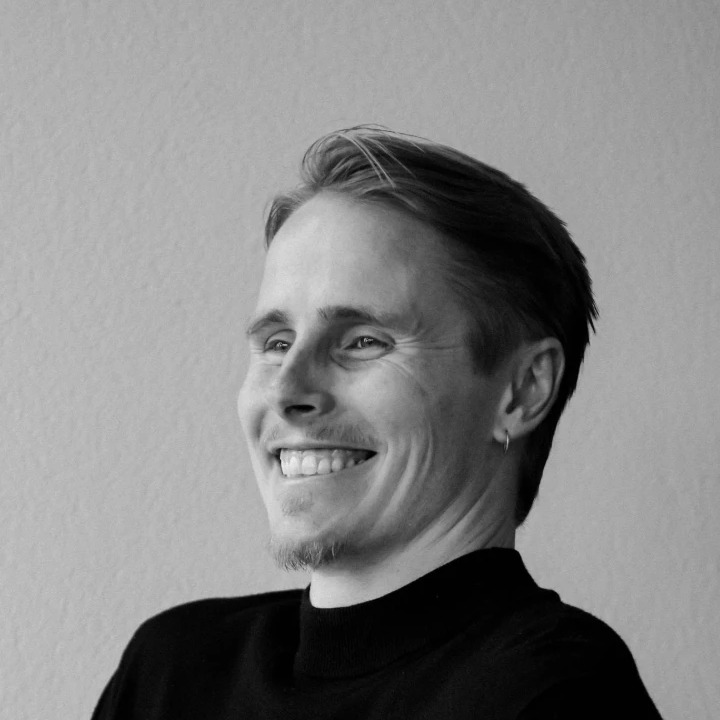
Ruben Laukkonen
Ruben is a neuroscientist, director of the Flourishing Intelligence Program at Oxford University, co-director of the Centre for Eudaimonia and Human Flourishing, and author of the Sacred Basic newsletter.
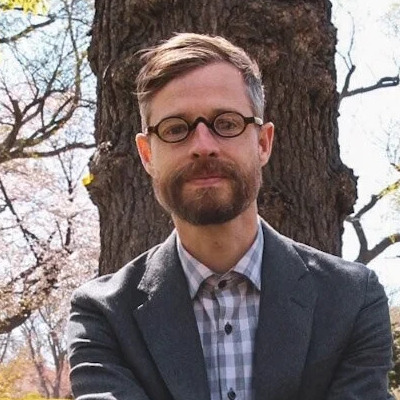
Mark Miller
Mark is a philosopher of cognitive science, researcher at Monash University’s Centre for Consciousness and Contemplative Studies, Lab Manager of John Vervaeke’s Consciousness and Wisdom Studies Lab at the University of Toronto, and host of the Contemplative Science Podcast.

Kathryn Devaney
Kati is a neuroscientist and meditation teacher. She is currently the Chief Scientific Officer for The Consciousness Foundation. She has co-founded two meditation centers, including The Berkeley Alembic and the SF Dharma Collective.

Lars Sandved-Smith
Lars is a neuroscientist, doctoral researcher at the Monash Centre for Consciousness and Contemplative Studies, AI researcher at Softmax, and meditation coach. In 2024, he received the Computational Phenomenology of Pure Awareness Prize.
Additional thanks to: Aviva Berkovich-Ohana, Georg Northoff, Idil Sezer, and Nicholas Bowles.
Transcript
Lars: So my background originally is in physics and philosophy.
I got involved in neuroscience to study meditation.
I did physics previously and was going down the academic track in physics and then kind of lost interest in it,
This is Lars Sandved-Smith, a neuroscientist who researches advanced meditation.
Lars: And then working in consulting, led to a bit of a burnout experience. And there was this kind of awakening to my mental health as like a thing and I wouldn't have thought of myself as being not well, that combined with some sort of timely psychedelic experiences kind of opened my mind to this idea that in the investigation of the nature of reality one's experience is also fair game. And particularly powerful psychedelic experience, put consciousness into the heart of something your model of the nature of reality has to account for. And then little by little, it kind of led to me getting interested in meditation and then started meditating and immediately just kind of felt like, wow, there's really something here.
There's really something really fascinating going on here. And I fell in love with it and started practicing a lot and going on retreats and, quit my job, went to India, learned yoga, did the whole kind of like hippie trip thing. And then kinda thought, okay, well what can I do with this? And discovered this whole field of contemplative neuroscience that was just in development and still is.
So Lars gets back from the hippie circuit in India, and winds up going into a PhD in contemplative neuroscience, devoting his professional life to meditation.
And the part of the story that often gets glossed over, but that I wanted to focus on, was what happened when he started meditating that was so compelling that he reorganized his entire life around it?
As is very common among Western meditators, his first interest in consciousness and meditation came by way of a psychedelic trip.
But it's not obvious that after doing a bunch of mushrooms or acid or whatever your psychedelic of choice is, that when you meditate afterwards, sober, you'll have a similar kind of experience.
Again, people often find meditation boring and dull, which is not how I'd describe an acid trip.
So I asked Lars if there was a moment in his meditation practice where he found that same kind of intensity in sober meditation that he did with that psychedelic trip, a moment that gave him that feeling that there was really something there he wanted to explore.
Lars: I remember one experience in particular, meditating in London and this was really kind of like the tipping point for me of being like, okay, I'm in, like I'm in this for now for like the, the long haul. There's really something here where, for whatever reason, I just sort of tuned into a sense of discomfort in my experience. And just made that the object of practice. And that was kinda one of the first times I'd done that. Before that I'd been just focusing on the breath and, and this I really like turned my mind to just discomfort in the body. And it just led to this period of about two hours of just surrendering into waves of discomfort moving through my body in a way that was then taking over my body into just spontaneous movement.
It started subtle because I was sitting in meditation but then as I was sitting, it started kind of like moving in the shoulders, moving in the neck, and then moving in the arms. And then I kind of got freaked out a little bit 'cause you know, my arms are moving by themselves and like all I'm doing is paying attention to discomfort and just like allowing it to happen. And then I'm just watching some movies happen. And then I thought like, this is too much, this is too weird. I'm kind of being a bit of a weirdo here. Like I gotta just chill out. Maybe I just, you know, like, I gotta relax.
And the thought that came to mind was, but who's doing this?
And a really peculiar thing happened. And I don't actually share this very often, but it sound, it sounds very strange, but as I was asking that question of who's doing this, my eyes just so happened to lock with my own reflection in the window in front of me.
And this spontaneous thought came into my mind, which is like, I'm doing this.
And then the follow on thought was, well, if I'm doing it, then I, you know, I care for myself and so this must be in my best interest. And that just allowed me to surrender into it. And so then I just completely went with it, and then it really transformed. And then I was like standing up and doing all kinds of folds and poses and, basically. Like what it felt like was like the stretch that my body exactly needed in that moment, you know? Or like the movement that my body was like craving. And then the next one, and then the next one, and then the next one.
And it was just like this sloughing off of crust and tension. It was just incredible. And it was part, this experience was probably why I went to India and studied yoga too. I had this feeling that the yoga was something that had been discovered rather than something we have developed. And that there's something here about the kind of the roots of yoga that was going on, that those movements are kind of opening your body energetically or physically. But in that moment it was very, ecstatic and opening and it just felt like a discovery. It felt like a discovery of something that was possible. And a kind of a direction that that would lead to just wellbeing really, I think, and joy and, and, and, and, and something like a deeper understanding of something or other of myself, of the nature of being, of what it means to be alive or conscious and and it is related to meditation somehow, and I didn't really know how and, but it was something I wanted to pursue.
In the last episode, we heard a whole bunch of these kinds of experiences where meditation gets far stranger than expected and opens up the mind as this exciting frontier to explore through practice.
In this episode, we're gonna do exactly what Lars did. We're gonna move from descriptions of these meditation experiences into the emerging scientific field that's trying to explain why meditation causes them, and what they can tell us about the mind.
I'm Oshan Jarow, and this is episode three of Pivot Points.
Up until pretty recently, if we'd gone to neuroscientists with the stories we heard last episode and asked them, "What's going on there? Like, why is meditation causing all that?" There wouldn't have been much of an answer.
And in part, that's because the field of meditation science is still relatively new.
Kati: There's a sort of cluster of things that are just regarded as not science. And we can put, I mean, there's some really easy things to put in that bucket astrology, right? Like, you're not gonna get an NIH grant to do an astrology experiment. Because all of that is in the bucket of not science.
This is Kati Devaney, who we heard from at the end of last episode. She has a PhD in neuroscience, has helped start up a couple meditation centers, and is now the research director for the Consciousness Foundation, which funds research on advanced meditation.
Kati: And meditation practice in general was in that bucket until relatively recently. And then some pioneering work brought it from astrology crystal bucket into the clinical trials bucket, but what is still in the sort of like astrology and crystals bucket is the deeper end of meditation practice. So these kind of like one-time insights that result in much greater wellbeing. Anything talking about sort of the path of enlightenment or awakening has been outside of the purview of academic research and that is just starting to change.
So we do have a few decades worth of research on the lighter end of meditation, stress reduction, basic mindfulness. But scientifically speaking, the deeper end of meditation, including all these pivot points we've been hearing, has been mostly uncharted territory.
And the association of meditation with weird and unscientific stuff like crystals was definitely part of it. But at the same time, the deep end of meditation deals with significant changes to the structure of conscious experience. And neuroscience as a field, again, until very recently, had hardly engaged or developed any theories of consciousness at all.
Consciousness itself was considered weird and taboo in neuroscience until maybe a decade or two ago. If you don't have a science of consciousness, you can't have a science of deep meditation.
For example, when I was interviewing neuroscientist Ruben Laukkonen, who now runs a lab studying consciousness at Oxford, he told me that when he started working on his PhD in the mid-2010s, he already knew he wanted to study deep meditation. But the science of consciousness, let alone meditation, hadn't developed enough yet.
Ruben: Basically when I was doing my PhD, the quality of the models in cognitive science were primarily like trying to make sense of specific cognitive processes in like super narrow domains. And, from the perspective of someone who was practicing meditation and having interesting experiences, it was just so obvious to me that these models that we had were completely dissatisfying. And that, at least at that time, what I was reading from the Eastern traditions was far more compelling from the perspective of the richness of subjective experience.
But by the time he gets to the end of his PhD, the study of consciousness in general and meditation in particular was starting a big shift.
Ruben: But around the time that I started my postdoc work on the computational neuroscience of meditation, active inference and predictive processing was also becoming a much more, prominent, idea. And so I began to have a lot more, exposure to this kind of new way of seeing how the mind, brain, and consciousness can be holistically framed and researched. And at the same time thinking about that in the context of meditation. And that was the really the moment when I realized that, okay, we can really start to make some progress on these questions in a deep and theoretical way. I mean, the purpose of science ultimately is understanding.
Not just to collect like infinite amounts of data, but just actually understand how the mind, brain, and consciousness works and how these, far ends and edge cases of meditation, what they reveal about the nature and possibilities, of the mind. And I saw that this is now a possible thing to begin to probe in a meaningful way.
So a major development, not just for Ruben, but the field of meditation science on the whole, something that helped lift it out of that astrology and crystals bucket, was the rise of this idea called predictive processing.
Mark: Predictive processing, active inference, I think is, it's reasonable to say that it's the preeminent computational neuroscience framework today. I think it's the leading thing on tap.
This is Mark Miller. He's a philosopher of cognitive science and a researcher at Monash University's Center for Consciousness and Contemplative Studies.
A focus of his research is basically using predictive processing to make sense of what meditation does to the mind The basic and counterintuitive idea at the heart of predictive processing is that we do not experience the world directly. Our eyeballs are not windows onto the world outside of our skulls. Instead, our entire conscious experience is a model of the world that's generated by our brains and bodies.
And if that sounds weird, remember that we all do this almost every night when we dream.
To dream is to internally generate a rich and convincing model or experience of a world.
The difference between waking and dreaming is that when we're awake, the brain is constantly checking its model, our conscious experience, against incoming sensory data and refining the model to reduce the gap between them. That gap is called prediction error. This is why many neuroscientists call waking consciousness a controlled hallucination. It's a hallucination in the same sense that dreams are, but one that's constantly checked and amended against sensory data from our eyes, our ears, and so on to try and keep our experience in line with the environments outside of our skulls, to make sure that consciousness is a good representation of our environments rather than letting it run wild into fantastical dream worlds.
You could think of dreams as uncontrolled hallucinations.
Mark: You thought the brain was passive. You thought it waited around for sensory signals. You thought it interpreted the world by taking in individual bits of information and building up a particular view.
You thought that was the case. But it's not.
Turn it all upside down.
The brain primarily trades in trying to figure out how the world works, how you work, how other people work, so that it can, from the top down, proactively predictively, figure out what's gonna happen next. It only uses sensory signals from the world to update its model. Then the things you're experiencing aren't the things out there. They're your own best guess. Structured, constituted by the beliefs that you have by the things that you believe to be the case here in the world. This is a controlled hallucination. You build your reality moment to moment to moment from the top down based on your expectations for what's about to happen, that that's your reality.
That's the only thing you have your full experience as, as a human here is being endogenously created potentially in this way.
The story of consciousness as told by predictive processing is not without critics. Some scientists feel it's heavy on theory and math, but light on evidence that confirms all the theory. And some philosophers argue that the language of predictive processing, calling consciousness a hallucination, an internal model, a representation of the world, that all these frames can make us feel like we're just brains stuck in the vat of our heads. And consciousness is just a movie being cast on the interior surface of our skulls, one that depicts that mythical world out there that we never actually experience directly. It can feel isolating. And over time, critiques are going to help pressure test the theory.
But before predictive processing, the science of meditation had basically no comprehensive story to tell about what was going on in these kinds of big transformative experiences. The field could tell you that something was happening based on stuff like brainwave data, but they couldn't tell you the mechanism behind it.
With predictive processing, we had this huge jump in our ability to tell a detailed and descriptive story about what exactly is happening in the mind through meditation, and why.
And as Mark explained when I pressed him on how seriously we should take predictive processing, being able to tell more explanatory stories is a mark of scientific progress.
Mark: Right away it was a theory that solved a bunch of problems and puzzles that we'd had in our science for a long time. What you wanna look for, when you're looking for the fidelity of a new framework is you wanna see, does it do better than the past framework. Especially around persistent, difficult to resolve issues. And it does that. Does it fit well with the other sciences that we feel confident in? And it definitely does that. Now are we at the end of science? Of course not. But I think this is our honest to God best bet for what a cognitive system is doing today.
Right from the outset, predictive processing appealed to meditation scientists because contemplative traditions have been using similar language for centuries.
Mark: How many contemplative traditions are like the world is a mirage. This is a radiant display of your own mind. I don't know how you ignore a, a rich, mathematically accurate, experimentally powerful computational framework. That starts by saying your experience of the world is being endogenously generated and the thing you think and the thing you believe, they constitute and construct your experience of reality. You are your beliefs. And what then the contemplative practices do is they offer a way of adjusting, impacting, augmenting, the machinery that is underlying the production of your real world experience. It's adjusting the constructive process that makes up your reality.
So if you think back across the insight experiences that we heard last episode, one of the most common types was unhooking from thought.
Sean: I basically noticed that I could pay attention to just seeing itself as something entirely separate from thinking.
Pranab: And I remember feeling like, oh, I unhooked. Thoughts were there, but they didn't have a grip on me.
Kim: Just the relief it was to not be blended with those thoughts, to have a practice that would unblend me from those thoughts. They weren't me.
The predictive processing account of what's going on here begins with attention.
Mark: And attention, you know, is a kind of superpower in the brain. Wherever attention goes, that's where all the self-organization goes. It's the thing that showcased the brain as this incredibly intelligent but also kind of stupid system. It'll do whatever you want. Like whatever you tell it to do, it'll start freeing up resources to do that thing. So you really have to take seriously, like what, what have you been telling your brain to do for the last 10 years?
Imagine how the early days of meditation usually go. It's often just trying and failing to keep your attention in one place. Maybe it's on your breath, your body, a visualization or a mantra. Whatever it is, attention inevitably wanders somewhere else. For me, focusing on my breath usually somehow leads to imagining great feats of athleticism in my rec league soccer games. But this should be difficult. If you've never done much meditation, odds are never in your life have you tried to pay attention to your breath for twenty minutes. That isn't normal behavior out in the world. Your brain has never organized itself around focusing on the breath for that long.
As Ruben explained it, meditating on the breath trains the brain to get better at holding that focus.
Ruben: So when we pay attention, say to our breath, what we're doing is we're essentially up weighting the strength of those neurons associated with the modeling of your breath. So the breath is a sensory stimulus is being mapped on the brain and there's a certain kind of pattern of neural activity that is associated with representing that sensory activation. And when we attend to the breath, the activation of those neurons basically strengthens.
But here's the thing, that kind of training and strengthening is always happening. By default, most of us spend our lives paying very close attention to our thoughts. We've trained our minds to organize around thinking by the same mechanism that Ruben described for the breath.
Ruben: And so what tends to happen as we grow up is that our thinking mind gets a lot of weighting in our experience.
So obviously we are modeling our whole reality. We're modeling our bodies, we're modeling the world around us, our future actions and so on, and going about our day. But a lot of that time, the thoughts that we're kind of self-generating are given a disproportionately high weighting relative to the rest of our experience. And so you could think of that as covering part of the hooking process that you describe. In the sense that compared to our experience of our bodies and the rest of the world, the thoughts that the mind is generating are big, they're loud and they're bright. Whereas everything else is kind of dimmed.
So this early dynamic of unhooking from thoughts is almost literal. By showing the mind over and over that it can pay attention to something other than thinking, it slowly begins to organize around that capacity.
Ruben: Now when you practice meditation, you're turning up the brightness on the rest of reality. And you're using your sensory system as a kind of gateway to turning up the brightness on the rest of reality instead of the kind of incessant, loop of thought, which doesn't really get us closer to the things that we want. It's a bit of a virus in some cases thinking is really valuable and we shouldn't get into any fights with thinking, but when it's extremely loud relative to the rest of our reality, that is not a very kind of free and liberated state to be in.
So what we can think about happening as we unhook is that we're increasing the weight of neural activity associated with the rest of our experience as opposed to our thoughts.
And meanwhile, says Mark Miller, a deeper shift is happening too.
Mark: Right now you think your thoughts are identical to you. You think they exhaust who and what you are, so that if your thoughts aren't good, or your thought processes are problematic, then you're like, I'm not good. I am problematic. I am that process itself.
By default, it's not just that attention is usually hooked into the stream of thought. Our sense of self, the mental processes that we identify with, also follow attention. So through the unhooking process, that sense of self and identification can also begin to separate from thoughts. And when your sense of self begins to peel away from the main process it's been identified with for most of your life, that can feel like quite a big deal.
Mark: That means you've unblended from attention as a process. You are not identical to your attention, and you're not identical to the mental, emotional, and physical stuff that the attention keeps going to. Doesn't mean it's not you, but you're not identical to it. And that becomes obvious for the first time. Holy whoa, look, the mind is moving. It's telling me I wanna go kill that guy. And that's not me. I'm here. I'm just being aware and I'm watching the mind's machinery play itself out for the very first time. There's an aha moment. There's a, oh my goodness, I am not what I thought I was.
I loved that last line of Mark's, "I am not what I thought I was." Because there really does seem to be this strong link between the endless stream of thought and our sense of self. So it makes sense that when you relax your mental grip on thinking, the sense of self can open up, too.
And sometimes, as I heard across my interviews, that sense of self can just disappear.
Carla: When I'm in that space, something is living me. I'm not me anymore. I'm not an I.
Alejandro: I felt the complete dropping off of, no, no ego, no self, nothing, just the world and like a deep sense of the bottom dropping out, but everything is still here.
So I asked Ruben how we get from unhooking from thoughts to loosening the sense of self to losing the self altogether.
Ruben: Well, it depends on which part of ourself.
Ruben explained that there are three different stacked layers that make up the sense of self. The narrative self, the embodied self, and the experiencing self.
Ruben: Perhaps the most relatable and superficial layer is our narratives about ourself, right? So we have a kind of story about who we are, that goes back all the way to the beginning of our memory. And it tells us, what kind of person we are, our interests our pains, our experiences, our hopes, our desires, and so on. So we can call this the narrative self, right? So often what happens is if you realize that, okay, I'm not my narratives and the thoughts are kind of illusory in some way, instead what arises is a quite a strong identification with the body and experiencing. Which was always there, but was in some way eclipsed by the identification with the narrative self.
This second layer, the embodied self, is the feeling of being a body. You're aware of your arm, your chest. Everything from your heartbeat to the feeling of cool air brushing against the skin of your forearms, all of these internal sensations help create this embodied layer of your sense of self.
And just like the narrative self, the embodied self can also fall away.
One of my favorite examples of this from my interviews comes from an exterminator living out in British Columbia named Tobin.
Tobin: How do I word this? The distance between the sensation in my hands and the sensation in my feet.
Visually, I can plot them and say, yeah, there's my feet, you know, a few feet down from my midsection and my hands are folded in my lap. And there is a notable difference in the distance between them. But when your eyes were closed and I was focused, I realized there was no sense of distance. My legs didn't have a length to them in their physical sensation, so that was one of those big aha moments. I'm like, oh, oh, I, I get this sense now like I'm not embodied, my hands and my feet are not separate in those moments, they are part of the same sort of experience.
That was a big sort of turning point as to my sense of what it means to be a cloud of sensation.
Not long after that, Tobin had a second experience.
Tobin: I was lying in bed, and there was no physical sensation in my body. I don't even know how to describe it, but it was not a… I'd lost the sense of embodiment. My moment of awareness was a lot bigger than it had been in the past. I was like, oh, cool.
I'm, I'm, I think I'm starting to get this. It was, my, my moment of like, I gotta, people need to know that this is cra. Like I didn't realize that this was something that could at that point in time, it was completely foreign to my idea of how I experienced my body.
So those are the first two layers of the sense of self, narrative and embodied.
Ruben: But then we can also recognize that there's an even deeper layer of self, which is this like first person perspective.
So I have a first person perspective on my body and on experience, right? I can see my body, I can perceive my experience, or at least it seems that way, right? And so in some way, the kind of first person perspective, the first person self, as it's sometimes talked about in the literature, is an even more primitive kind of raw, not actually raw, but kind of a more raw subject of experience in some way.
Sometimes this is called the experiencing self. There's a quality of mine-ness to experience. It's happening to me. So even if I'm not telling myself narrative stories about who I am, and I'm not feeling my body as who I am, there's still this center of gravity to my experience, often somewhere right behind my eyeballs.
But just like the other two layers, this first-person perspective on experience can fall away.
And we've already heard a few different descriptions of what that feels like.
Matt: So the spacious awareness that was in the background was suddenly in the foreground. And the objects all seemed, rather than me looking at an object, it was like all these objects were just arising in this spaciousness. And at the middle of it there wasn't a person there. It wasn't an elimination. I didn't vanish. I don't wanna say I, because I is more of a function and it wasn't functioning in that way.
Claudia: I had this intense experience of feeling what felt like the little person, the little me in my head, sitting behind my eyes and controlling everything. I had this incredible visual of that person just like going back and going down my neck and into the rest of my body and just joining the rest of my being.
Sean: It's like I subjectively disappeared. And I kind of froze. What is going on there is just the scene. There's no actual me here. And not conceptually. I've had that before. I mean, experientially, there is nothing here.
Remember when Reuben compared the predictive mind to a house of cards, where our experience is a layered construction with deeply rooted beliefs at the bottom and more superficial, flexible beliefs towards the top?
When you unhook or deconstruct a block at the bottom, everything above is unsteadied, and you get that restructuring process that's the signature of a pivot point.
Deconstructing the narrative self is one of the more superficial layers. It's towards the top of that house of cards. And as we've heard, seeing our stories about who we are dissolve can still be completely unusual and fascinating. But when you go to the next level and deconstruct the embodied self, you're going even deeper into that hierarchy of the mind's beliefs and unsettling this more foundational layer of the sense of self that's always been attached to that feeling of your body.
And if you go even deeper, the experiencing self falls away. That is that sense of experience being ours. And that is a foundational belief that our mind, until now, has taken as a solid and unchanging fact. And then suddenly it's gone.
So we can think of this whole class of insight experiences as glimpses into what happens to the structure and feeling of experience as meditation deconstructs layer upon layer of mental habits. And specifically mental habits that ordinarily shape our experience automatically or unconsciously.
Ruben described these habits as layers of conceptualization and interpretation.
Ruben: There's a kind of deepening into the present moment where the higher order, abstract processing of the narrative self, of the embodied self, of the first person experience are released in favor of a much more kind of raw experience. And as our research has suggested, these layers of the mind, all the way from the narrative self to these kind of fundamental structuring of experience and dualities can be seen as part of the brain's natural abstraction hierarchy. It kind of maps on extraordinarily well to the way that the brain constructs experience from basically raw sensory data all the way up to our concepts, narratives, categories, and so on.
So we see that in the space of, you know, a few hundred, 400 milliseconds, the brain builds up a model of reality from the early sensory regions to the higher order networks of processing and in between is every layer that kind of stacks up interpretation and conceptualization on top of this kind of raw sensory data.
And here's where insights can go from just interesting experiences to actually useful and beneficial ones. Each layer of construction that adds more conceptualization, more interpretation to experience, is narrowing the kinds of experiences available to us.
Of all the different ways that we might ultimately experience a moment of consciousness, each layer of automatic interpretation constricts the possibilities. While the more of that process that we're aware of, the more of it that we can see in experience, the more options our minds have ultimately to reduce prediction error.
Mark described insight as giving the mind more degrees of freedom or opportunity to discover different ways of experiencing the world, including getting a glimpse into how the whole mental system itself works.
Lars: What meditation is driving in large part is a training of meta awareness. Which is basically like turning the light onto the dynamics of our model.
This is Lars Sandved-Smith again, who's actually a colleague of Mark Miller's.
Lars: Our model is not this static thing. It's changing, our attention's fluctuating and moving, and usually that's happening in a way that we don't see that's sort of transparent to us. We just see the world through it. And I think that process of training meta awareness is what's at the heart of many of these insight experiences where for the first time ever you sort of notice a fluctuation of the mind. You notice how a sensation goes to a feeling, goes to a craving, goes to a kind of an idea about self. And I would model that as, seeing the different steps in the inferential process giving rise to your experience and then how you're taking the next action.
And being able to see that now is incredibly liberating, because there's all these different places where you can now intervene. You're really learning about how you work and what makes you tick and how your mind is working and all these things that are just kind of, we're blind to otherwise.
The concentration experiences we heard about sounded a bit different.
They don't exactly fit the unhooking or deconstructing mental habits mold. Remember Evan talking about his back pain.
Evan: The pain just dissolved. It was amazing. One moment. Searing pain, and then the next moment, it was just, like static.
And Max.
Max: And suddenly I was feeling very tingly and it was building and building and building over the course of just like a minute or so. I was like almost shaking while I was driving because there was just this, this physical excitement and energy and bliss just happening and coursing from my whole body.
Compared with insight, concentration experiences are much closer to altered states of consciousness, where we experience something different altogether. And if we use the lens of predictive processing, we'll see that it's actually the same mechanism driving the whole spectrum of concentration from dissolving pain to coursing bliss.
Remember we said that our predictive minds are always running models of reality, that controlled hallucination that is our experience. And the goal of this system is to minimize the prediction error between their models and the sensory data coming in. The less prediction error the mind registers, the more confident it can be that its model is accurate. And the more prediction error, the more uncertainty there is about its model.
Now, model here really just means what you are experiencing, and that's true of our mental experiences, but it's also true of our physical experiences.
Ruben: People often when you say model, they think of things in your head, but actually our physical experiences are also models, right? They're are models being enacted by the brain.
This is Ruben again, describing how the pain that we've heard meditators describe is just part of the model being generated by the predictive mind.
Ruben: And so when you are sitting in intense practice like a Goenka retreat and you're encountering all this lumpy pain all over your body, that is just excruciating. You have a certain model of your body that is being activated there, and that model is active because you're not used to sitting like that, and your body brain is telling you that you should stop doing this because this is inconsistent with what I believe. Because what I believe is good is, following my impulses, following my pleasures, chasing after whatever the next kind of thing is that, I'm craving for. Right? And so all of those models are getting this extraordinary prediction error, which feels in many cases like suffering.
'cause you are expecting to have your pleasures and desires fulfilled. And instead what you're getting is this incessant stream of present moment data from your body that you now like simply cannot escape. And it's, it can be truly excruciating.
So when you're sitting on the eighth day of retreat and your right knee is scorching with pain, your mind is continually trying to get you to move, but you aren't listening. You're just sitting there, and the prediction error is grinding away. And this is where it gets interesting.
Ruben: But at a certain point when enough prediction error builds up, the brain has another way to deal with error. One is to reduce error through actions and fulfill your satisfactions and chase your desires.
Which in this case would mean getting up, moving your body, stretching your legs.
Ruben: But the other is to actually change your model. So your experience can change when I'm hungry by getting food, right? That's how the body gets rid of those prediction errors that are coming from your gut. But the other way is to completely change your model of hunger itself. And suddenly those hunger signals become something completely different. Right? Same is happening. I think when we're exposing ourself for a long period to these pains is that at a certain point the brain's models just give up. They realize that the error is not gonna stop. The signals are not gonna stop. You're not gonna move. You are a stubborn person.
And suddenly it chooses instead to change the model because, the errors are too strong.
So when the predictive mind's first strategy of getting you to move doesn't work, it'll eventually resort to the second strategy, changing the model of experience altogether.
Ruben: And so in that moment when the models change. The experience changes and can change really dramatically, And so when our embodied direct experience goes from deeply painful, constricted, lumpy to open, blissful, and filled with light.
There's a really deep change that's happened to your models, and I think it's because you've been exposing yourself to this prediction error for so long, the brain decides to give you another way out.
Now, what about bliss experiences?
To get to the mechanics of bliss, remember that everything we experience is a prediction, which means that in any one moment, your experience is a collage of a massive number of predictions running simultaneously, and every prediction is another opportunity for prediction error.
So just updating the model about the placement of your knee to stop generating that painful prediction error, that's dealing with just one source of prediction error. Resolving it by updating the knee model can make a big difference in our experience, but it doesn't make much of a dent in the overall amount of prediction error racked up across the mind, across every facet of experience.
And that's where concentration has to reach to get the more intense experiences like the first jhana, that series of eight states of absorption that begins with buzzing bliss in the body.
So beyond updating particular models to deal with this or that particular prediction, enough concentration can also reduce the amount of prediction error across the entire mind.
Mark: Cause you don't have infinite acetylcholine, infinite dopamine. You have a limited amount of the sort of neuro-regulatory chemicals that keep these predictions on top. If you pour them all into one object, you are also simultaneously removing them from the rest of the model.
Concentration is literally concentrating your attentional resources. If you're focusing on your breath, you're investing all of your attentional resources into predictions relating to the breath. And as you do that, those resources are withdrawn from the narrative self's daydreams and that pain in your knee and the spatial awareness of the room you're in and your sense of how much time has passed. All of these predictions are normal features of ordinary consciousness. They're useful, but they can also carry what Mark calls entropic drag, a potential for error.
Mark: You've got all of these predictive tasks happening in the past, in the future. Things you're worrying about back there, things you're worrying about up here and you don't notice it. But there's a little bit of entropic drag, a, a considerable amount of entropic drag as those systems are trying to work out various forms of pernicious uncertainty. What are you gonna say to your partner when you get home after you've had a fight? What does next year look like when you don't have job security? Where am I? That's, that's latent in the system. As the system is trying to work out those inevitabilities, work out those potentialities.
When you're sitting in meditation, to concentrate is to let all of that go.
And as you withdraw your attentional resources from all these scattered predictions, they start to go offline, and so does the prediction error that they might have been carrying. The overall amount of prediction error registering in your mind begins to plummet, and it turns out this feels really good.
Mark: As attention, but coalesces on an object. Joy starts to arise. That joy arising is because the reward dynamics are saying, oh my goodness, this is fantastic. You temporarily remove a lot of the weight from those temporally deep wings. You also simultaneously remove all of the problematic entropy at those wings. So no wonder you have an ecstatic state. Your reward system is going, I don't know what just happened, but we're doing like much better than expected right now. Like we were just grinding on 44,322 error units and we're down to 167. Like, fuck, do this more, do this more. Whatever you're doing, do it more. And that's why you, that's why the reward system then tacks attention to the object.
'Cause it goes, whatever you're doing, hold the line. This is unbelievably beneficial.
So the experience of joy that seems to come with this first jhana, what you're telling me is that effectively what we're doing is just feeling what it is like to temporarily drop the 10 million distributed sources of worry we generally always carry around?
Mark: A hundred percent and it's why jhana cools out over time. 'Cause you get more and more conditioned to it. But you get this feedback between powerful attention and then reward structures pinning that attention and around and around you go.
So Mark described this whole dynamic basically as a spiral between concentration that simplifies the mind and the brain's reward dynamics trying to encourage more of that error-reducing simplification, and the two just feed into each other.
Now, if this all sounds abstract or doesn't make all that much sense, then you're in the same boat I was in when I was trying to wrap my head around it. But what I found helpful was that in each conversation I had, scientists told me more or less the same story, just in slightly different ways. When I heard it from Ruben, for example, he described prediction error in terms of energy. One reason that the predictive mind wants to minimize prediction error, in addition to just wanting consciousness to be an accurate map of the world, is because prediction error is really costly. Prediction errors force your mind to update their models, and that takes more resources than just running the models as they were.
Ruben: So one of the key things that organisms need to do in order to get through life is to manage this energy budget that we have. And we need to manage that through food, drink, and oxygen and rest and so on. And we also know that the brain uses, a disproportionate amount of energy relative to the rest of the body. So for example, if you're doing like a loving kindness practice, or even if you're just working with your breath, suddenly you have this stable, relatively predictable signal. And all of the incessant simulation of moments other than the now, and all the error that they incur, have been wiped off the whiteboard.
Right? And this is of course.
Extremely valuable from the perspective of the brain body's energy budget. And I think a lot of that energy is used in simulating scenarios outside of the present moment. So suddenly you are going into this situation where you are incurring a lot less error because you're not simulating moments that don't exist. And so our inferences about our current state are much more positive in that situation. And I think broadly speaking, there's something happening in jhana or deep tranquil states where the system is coming to interpret that the current circumstances are very favorable.
It's, it's almost like you're engineering from within a situation where the brain interprets itself as being in a favorable state, from the perspective of prediction errors, from the perspective of, energy budgets, and so on.
So in both Mark and Ruben's telling, we're hearing the same process. Through concentration, the predictive mind engineers favorable states, simplified states where we release more and more of the usual spread of experience. And the more simplified the state, the less prediction error and uncertainty across the mind, the more the mind cranks up the pleasure to reward what you're doing, because it loves that engineered feeling of having a really accurate error-free model of the world.
And at the same time, you can see why these concentration states aren't sustainable. You wouldn't want your ordinary consciousness to be this hyper-simplified state forever. I actually heard as much from one meditator named Carla.
Carla: I cannot hold the jhana thing like that. Bliss is too, it's too much for everyday life, you know? It's, it's too, it burns you, it burns, you know?
And more broadly, you don't want to stay in these states because the world is complex. To navigate the world, it's useful to be aware of a bunch of things at once. To be processing a sense of space and time and how your body's doing, and what that sound is over there, and what you plan to do 10 minutes from now. All of which is why Buddhism frames the purpose of concentration as creating the conditions for deeper insight.
In those simplified altered states, it's easier to see into the deeper and less constructed layers of consciousness that we heard in all those insight experiences.
So insight drops us into deeper, less constructed layers of experience. Concentration pleasurably simplifies experience, and the explanations that we've heard are helping to rein more of the deep end of meditation into the world of science. But remember, pivot points are the beginnings of deep meditation. And the deeper you go, the less scientifically charted the territory becomes:
Ruben: In some way the deepest pivot points transcend both these kinds of altered states.
And even the kind of insight experiences. They transcend all possible conceptual notions and transform the system so fundamentally that, it can't really be put into words. And there's no way to actually describe it as any kind of particular insight because it's much more like stepping into a new reality that is forever changed. So there's a whole spectrum here, all the way from like, aha moments, the kind of ordinary aha moments that we experience. Then we might have the kind of insight that reveals a new state of consciousness like altered states. And suddenly discovering that there's these blissful parts of our being that are kind of ever present.
Then there's other kinds of insight moments that reveal a new view, for example. That there is no consistent construct hiding behind our eyes, controlling the body's movements. But then there it goes all the way quite a bit deeper than that even. These, that completely from the very ground under our feet transform reality itself for that person.
There's a tension here. On one hand, scientists like Ruben, Lars, Mark, and Kati all want to see how far into the deep end of meditation science can go. How deep a transformation of the mind can neuroscience explain? How far down the trail of pivot points can science follow? Here's Lars again.
Lars: Like my ultimate aspiration for the work is to kind of have a, have a grounded first principles account of awakening, with a kind of very, I wouldn't say deflationary, but very, rigorous and verifiable, testable, kind of model of what is really going on. But this isn't something that's generally accepted or thought about or just present in the culture. So my kind of hope is that through the kind of science of awakening, grounded in fundamental physics, allows that to be the case at some point in the future.
On the other hand, the deeper you go, the more difficult it becomes to translate what meditation is doing to the mind into the language and measures and frameworks that science requires. At a certain point, meditation seems to become irretrievably personal and subjective. But even if science can't perfectly explain the entire breadth and depth of meditation experience, all these scientists described another purpose to their attempts at pushing the science deeper. That if we could build up the science of deep meditation, it could ultimately, and ironically, become a source of faith.
Lars: I see that as the western opportunity for embedding faith in practice into the culture.
What we have faith in is the, in the west is science. And so in order to have the kind of the faith to embark on this journey before you've even collected your own data, there needs to be a kind of source or reason for that. And the religious or spiritual context doesn't do that for most people. And I'm hoping that the science can get to a place where they kind of gets people over the hump or over the fence.
In other cultures with strong contemplative traditions, the source of faith in the value of meditation practice before someone had any experiences of their own to generate interest usually came from believing in traditions, gurus, or sacred texts. But as Lars points out, Western culture tends to believe more in science than religion. And it's not that science can discover the truth of the matter that traditions haven't known. It's more that science is our cultural language. And as Kati Devaney put it, what the science of deep meditation is doing is really translating knowledge from one cultural grammar to another.
Kati: For my PhD thesis, I spent seven years demonstrating scientifically that people who've meditated a lot pay attention better than people who've never meditated. And if you talk about that in meditation circles, everyone's like, yeah, no kidding. But that was not scientifically documented the way that I documented it. And somewhere around year five, when I had the year five existential crisis that like every PhD student has, I was just like, what am I doing? And the answer that came to me, I was like, oh, I'm translating knowledge from one domain into another domain. That's my function here is I speak both of these languages and I can translate it.
And I see part of this scientific turn towards the deeper end of practice as another project of translation. We are expressing this information in the language of our culture in the same way that it's been expressed in the language of so many different cultures that came before us.
But of course, as with any project of translation, some ideas just don't carry over all that well. Some meditation experiences or insights just don't fit into scientific language, and the language of science has its own biases.
In my conversation with the meditation teacher, Michael Taft, he actually cautioned that if you get too swept up into the science, it can actually derail your practice.
Michael: Because I think science, or let's say, science-y type thought, is the actual religion of our culture currently. I think in the long run, it's completely going down the wrong path.
In the long run, the framework is incorrect for what we're trying to do.
Which is why in the next episode, we're gonna move from scientists trying to make sense of pivot points to meditation teachers.
Science is still in the early days of studying advanced meditation, but contemplative traditions have been working at this for thousands of years. And the teachers I spoke with generally shared the scientists' excitement around the value of making these experiences more accessible and legible to the public. But they also had much deeper concerns and words of caution around how the excitement that comes along with these experiences can become one of the more insidious obstacles to actually deepening a meditation practice.
If you wanna learn more about the series, head over to pivotpoints.xyz. There you can find transcripts, guest information, and links to more material. I'll be publishing bonus episodes and collections of short clips that didn't make it into the series through my newsletter, which you can subscribe to at heretodisappear.com. And if you'd like to support the series, you can become a paid subscriber of that newsletter or share the series with a friend.
Pivot Points is supported by the Waking Up meditation app, edited by Amy Standen, original theme music by Marcus Bagala, cover art by Valero Doval, mixed by Lucas Del Calvo, created and hosted by Oshan Jarow, and made possible by the generous meditators willing to share their weird experiences for public listening. Thank you all.